Children of Blood and Bone: Tomi Adeyemi, Hollywood, and the Art of Changing Your Mind
As an Amazon Associate I earn from qualifying purchases. Amazon UK affiliate links are labelled.
Children of Blood and Bone: Tomi Adeyemi, Hollywood, and the Art of Changing Your Mind
A seven-figure deal, a bitter casting dispute, a director who turned the film down twice, and the extraordinary magic a young writer discovered in Brazil: the story behind the Children of Blood and Bone film.
Before Orïsha, There Was a Little Girl in Illinois
Tomi Adeyemi was born in the United States in 1993, the second of three children of Nigerian immigrants who had made a home for themselves in the Chicago area. Her father had trained as a physician in Nigeria, and, whilst waiting for his qualifications to be recognised in America, worked as a taxi driver. Her mother worked as a cleaner before going on to run a group of hospices near Chicago. By the time their daughter became a published novelist, her father was practising medicine again.
Adeyemi grew up in the suburbs of Chicago, including Hinsdale, in a family where education and achievement mattered enormously. At home, she belonged to a Nigerian household; outside it, she was a Black American girl growing up in a largely white environment. Her older brother would pursue a career in music as Tobi Lou. Tomi, meanwhile, had already discovered the rather inconvenient pleasure of inventing entire worlds inside her head.
She began writing at around five or six. Years later, she would tell the Malala Fund that she had produced some three hundred pages of Naruto fanfiction, a pastime she credited with teaching her how to write action scenes. Inspired by The Parent Trap, horses, and Bollywood cinema, she produced an adventure about twins who shared her name. Somewhere between those childhood stories and adolescence, however, the girls in her imagination stopped looking like her. The fantasy books she loved had taught her, through the absence of characters she could identify with, to imagine adventures in which Black girls seldom occupied the centre of the story.
That experience would eventually become central to her work. First, however, came school, the expectations of a family that had worked extraordinarily hard to establish itself in another country, and the rather practical question of how a young woman with a talent for writing was supposed to make a living. Adeyemi graduated from Hinsdale Central High School in 2011 and went to Harvard.
The Education of a Writer, and the Magic She Found in Brazil
At Harvard, Adeyemi initially considered a career in medicine and later explored the world of finance. Literature kept drawing her back. Reading W. E. B. Du Bois’s The Souls of Black Folk helped her understand how a book written in another century could speak directly to the experience of a young Black woman in contemporary America. Around the same time, the racist reactions to the casting of Black actors in 2012’s The Hunger Games sharpened her determination to write fantasy in which Black children could be the heroes of their own adventures.
She graduated in 2015 with an honours degree in English literature and received a fellowship to study West African culture, religion, and mythology in Brazil. There, in a little gift shop, she encountered ceramic images of African divinities. The sight of these powerful, beautifully depicted figures captivated her. She contacted her parents, who explained that they represented the Orixás of Yoruba religious tradition. In that encounter lay the beginnings of Orïsha, the fictional kingdom she would later create.
Her own account and the Library of Congress biography associate her studies with Salvador, Bahia. A later Harvard Magazine profile places the particular shop encounter in Rio de Janeiro. The precise location is reported differently, but the Brazilian origin of the inspiration is a constant in her telling of the story.
My Rebels already know how much I love Brazilian mythology. Those of you who have read The Chosen will immediately understand why this part of Adeyemi’s story is particularly close to my heart. There is something extraordinarily moving about a Nigerian-American woman travelling to Brazil and discovering images of the divinities of her ancestral homeland. Enslaved Africans carried religious knowledge and traditions across the Atlantic, and generations of their descendants preserved and developed those traditions under circumstances that were often brutal.
In Brazil, the Orixás remain part of living spiritual traditions, including Candomblé. Exu, Oxum, Yemanjá, and Xangô have histories and meanings that extend far beyond the fantasy fiction they might inspire. I would love for more people to discover the beauty and richness of these traditions, and to approach them with the curiosity and respect they deserve. Adeyemi’s encounter in Brazil is a remarkable example of how cultural memory can travel across oceans, survive centuries, and inspire an entirely new generation of storytellers.
Sixty-Three Rejections, and a Second Chance
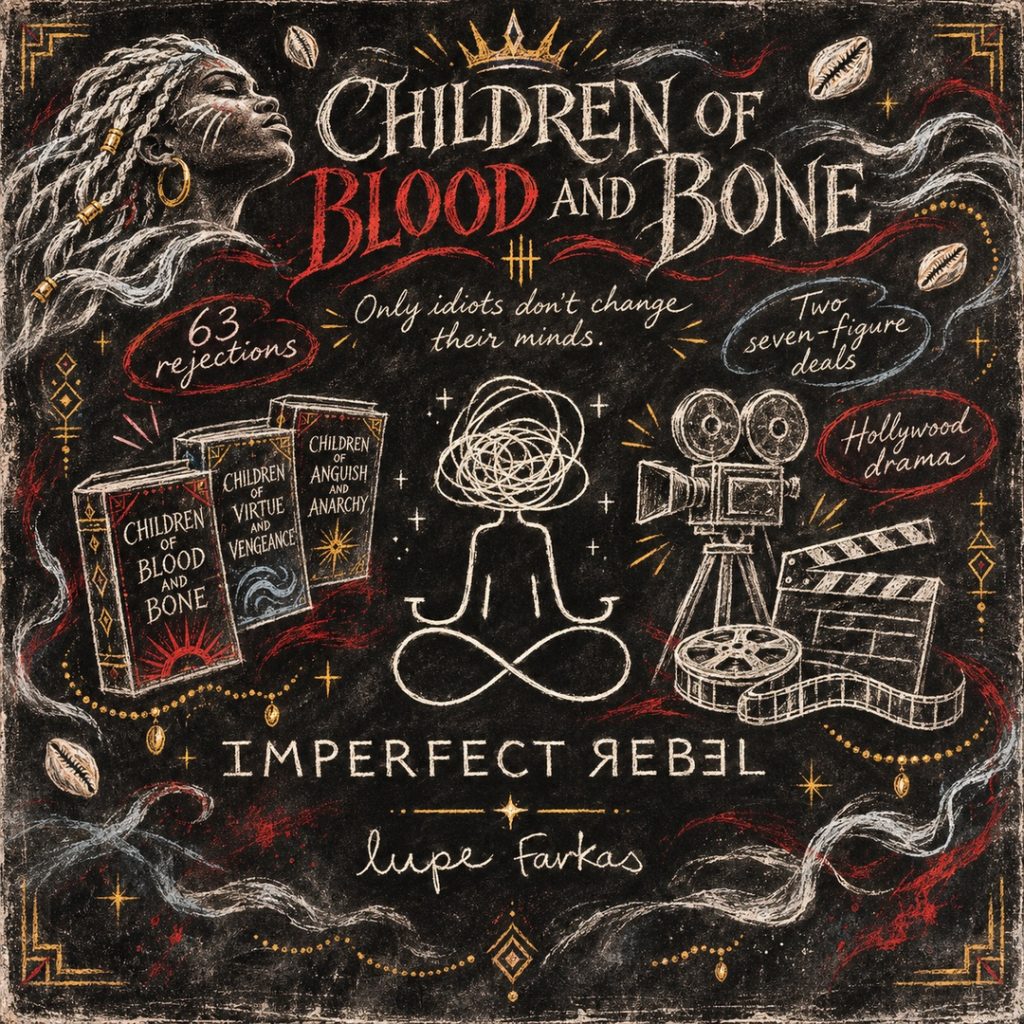
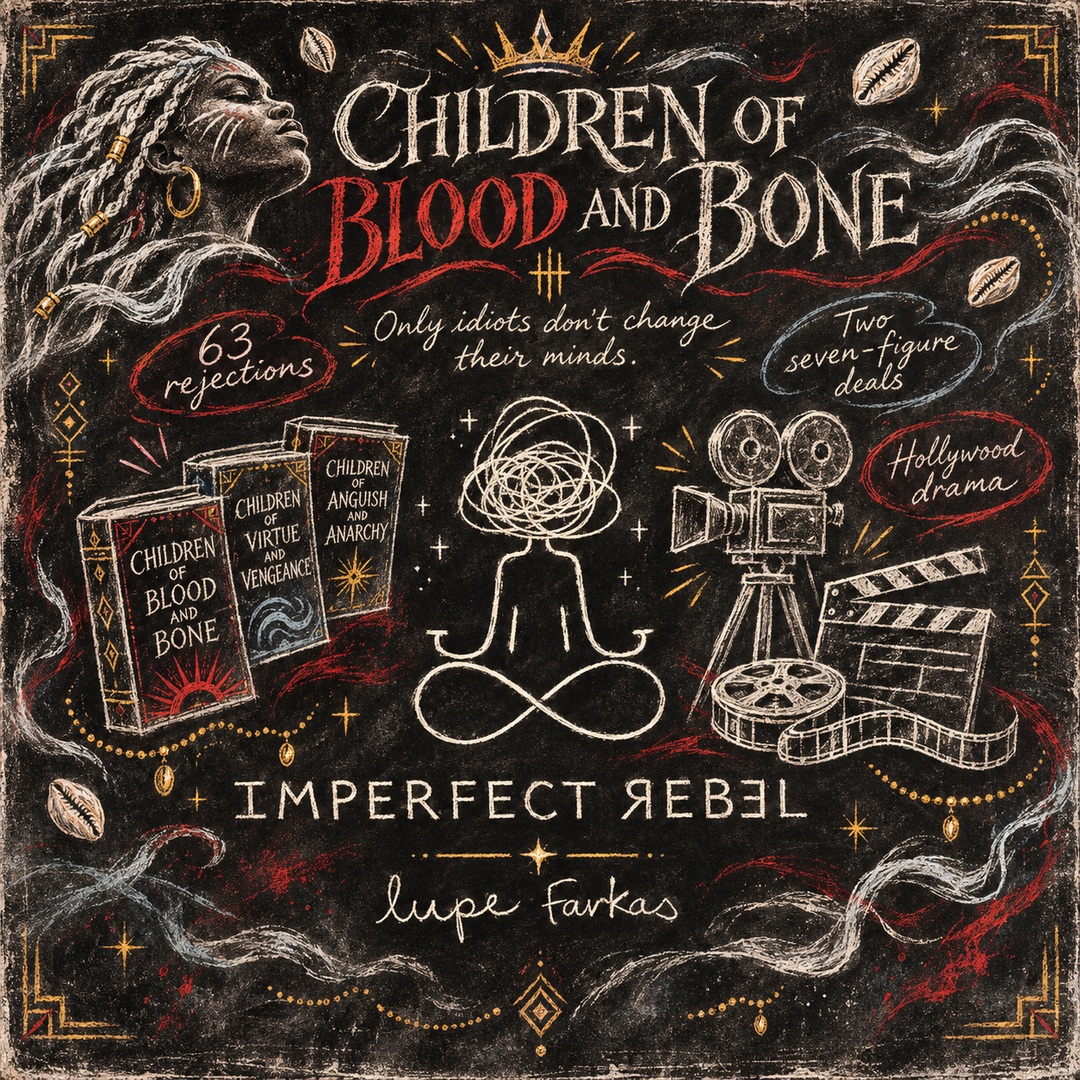
After university, Adeyemi moved to California. She worked in marketing and entertainment whilst pursuing the ambition she had carried with her since childhood. Her first attempt at a publishable novel, a fantasy manuscript she had spent four and a half years developing, failed to find representation. Sixty-three literary agents rejected it. Sixty-three, Rebels.
Before the bidding wars and the Hollywood contracts came the familiar experience of writing something, believing in it, and being told no.
Her father, who had become one of her earliest readers, encouraged her to keep going. She abandoned the attempt to sell that first manuscript and began working on a new story, drawing on the world she had imagined in Brazil and the questions of race, power, and injustice that had occupied her for years. By May 2016, she had exchanged a full-time marketing job for part-time teaching, giving herself more time to write.
The fantasy and a separate idea about police brutality became one novel after her boyfriend suggested combining the two. As she later explained at BookCon in 2018, she completed her first draft in a month, the second in another, and continued revising intensively for roughly eighteen months. She entered Pitch Wars, a mentorship programme for aspiring authors, and eventually signed with literary agents Hillary Jacobson and Alexandra Machinist. The manuscript underwent substantial revisions before it was offered to publishers. For anyone who has ever tried to publish a book, there is something deeply recognisable in this part of her journey. The success that followed would be unusually spectacular, but the work that preceded it was anything but glamorous.
Two Deals, Seven Figures, and a Book Nobody Had Read Yet
In March 2017, twenty-three-year-old Adeyemi found herself at the centre of the sort of negotiations that authors spend entire careers dreaming about. Henry Holt, part of Macmillan, secured the publishing rights to her debut in a reported seven-figure agreement. Separately, Fox 2000 pre-emptively acquired the screen rights, with Deadline reporting that the film deal was close to or within the same financial territory. The precise sums were never publicly disclosed. Temple Hill, the production company associated with Twilight and The Maze Runner, was involved from the beginning.
Consider the timing. The novel would not appear in bookshops until March of the following year. Hollywood had already committed to developing a world that the public had yet to discover. Fortune had certainly kissed this young author’s arse, but the manuscript was far from finished. Working with editor Tiffany Liao, Adeyemi spent another eleven months revising it, adding approximately two hundred pages and refining its characters and fictional world.
Orïsha Arrives in Bookshops, and Nora Roberts Enters the Story
On 6 March 2018, Children of Blood and Bone was published in the United States. Its heroine, Zélie Adebola, sets out to restore magic to a kingdom in which the maji have been violently persecuted. Joined by her brother Tzain and members of the royal family, she must confront the system that stripped her people of their power. Beneath the adventure lies Adeyemi’s exploration of racism, oppression, and the struggle to reclaim an identity that others have attempted to erase.
The book debuted at number one on the New York Times young adult hardcover bestseller list. The extraordinary expectations created by the previous year’s deals had found a readership to match them. Yet before 2018 came to an end, her name would be making headlines for a different reason.
In late November, Adeyemi challenged Nora Roberts publicly over the similarity between Children of Blood and Bone and Roberts’s forthcoming novel, Of Blood and Bone. Roberts rejected the suggestion that she had copied the title, explaining that her book had already been submitted to her publisher before Adeyemi’s debut appeared. In the response reported by Pulse Nigeria, Roberts criticised the professionalism of making such an accusation publicly without evidence.
Adeyemi subsequently apologised, acknowledging that the titles had been independently conceived. Roberts said that hostile messages nevertheless continued after the retraction. The Associated Press also noted that comparable titles had appeared before either of these books. There was no substantiated case of plagiarism. I give Adeyemi credit for apologising, although the incident also demonstrates how much damage a public accusation can cause before its author has an opportunity to correct it.
In a December 2018 interview with the Malala Fund, Adeyemi spoke candidly about the prospect of surrendering some of the control she had enjoyed as a novelist to the many collaborators involved in making a film. It was a prospect she found frightening. Remember that conversation, Rebels. It will acquire a particular significance as our story unfolds.
The Books Kept Coming. Hollywood Had Other Plans.
In 2019, Children of Blood and Bone received the Andre Norton Award for the previous year’s young adult fiction, and the Lodestar Award for best young adult book. In December, its sequel, Children of Virtue and Vengeance, arrived. By 2020, Adeyemi had been named among TIME’s most influential people. Her literary career was proceeding at a pace the film industry appeared incapable of matching.
Disney’s 2019 acquisition of Fox’s entertainment assets and the closure of Fox 2000 complicated the adaptation. Director Rick Famuyiwa had been attached, and the project passed through several stages of screenplay development before Lucasfilm took an interest. At Disney’s December 2020 Investor Day, the studio publicly announced the adaptation. For a moment, the prospect of a new fictional universe joining the company’s established franchises looked promising.
Development stalled. According to The Hollywood Reporter, Adeyemi wanted to write the screenplay herself, and Lucasfilm was unwilling to grant that request. When the rights returned to the market, rival companies began competing for them again. On 12 January 2022, Deadline reported that Paramount had won with an offer including a guaranteed theatrical release, creative approvals, and a seven-figure screenwriting guarantee for the novelist. She was also attached as an executive producer.
For a writer, that second agreement is especially interesting. Adeyemi had fought for the chance to contribute to the adaptation of her own work and had secured it. The full terms of the agreement remain private, however. The opportunity to write a screenplay and participate in creative decisions does not necessarily amount to the power to determine every casting choice, or to approve the finished film. That distinction would become increasingly important.
Enter Gina Prince-Bythewood
In 2022, Gina Prince-Bythewood directed The Woman King. Rebels, I absolutely love that film. The director had already demonstrated her ability to build emotionally compelling stories around formidable women through Love & Basketball and The Old Guard. The historical epic, starring Viola Davis, gave her a further opportunity to unite intimate character stories with the scale of a major action production. Its portrayal of Dahomey’s history also prompted public debate, a reminder that even enormously ambitious works can invite questions about their cultural and historical choices.
In December 2023, Prince-Bythewood was announced as the director of Children of Blood and Bone. She would subsequently reveal that she had declined earlier approaches to direct the adaptation twice. Having gained experience with increasingly ambitious productions, she felt prepared to tackle the story on the scale it demanded. When I discovered that the woman responsible for The Woman King would be bringing Orïsha to the screen, my excitement increased considerably.
Meanwhile, Adeyemi completed her trilogy. Children of Anguish and Anarchy was published in June 2024, concluding the story that had begun taking shape almost a decade earlier. The following year would bring her closer than ever to seeing the characters she had created in her twenties become flesh and blood on a film set.
Princess Amari and the Colourism Controversy
In January 2025, the film’s cast was announced. Thuso Mbedu, whom I adored as Nawi in The Woman King, would play Zélie; Tosin Cole would play her brother Tzain, and Damson Idris would portray Prince Inan. Viola Davis, Lashana Lynch, Regina King, Cynthia Erivo, Idris Elba, and Chiwetel Ejiofor were also among the extraordinary names assembled for the production. Amandla Stenberg was cast as Princess Amari.
Amari’s casting prompted a particularly heated response. The novel describes her as having dark copper skin, and her darker complexion is significant to her experience within the royal family. Some readers felt that choosing a lighter-skinned performer would diminish an important element of the character’s story. The controversy was about colourism: the preferential treatment of lighter complexions, often within the same racial or ethnic community.
The problem extends far beyond this particular production. A 2021 Geena Davis Institute study of screen representation found that close to four in five Black female characters in the media it analysed had lighter or intermediate complexions. Against that background, the frustration of readers hoping to see darker-skinned Black women in leading roles is understandable. In a book where skin colour is intertwined with privilege and power, the decision also raises a legitimate question about how the film will translate the novel’s themes. We will have to see the finished film to know how it handles them.
In February 2025, Stenberg addressed the criticism in a TikTok video. The actor acknowledged the importance of colourism and defended the casting, saying that Adeyemi herself had welcomed her involvement. Stenberg also recalled being told that the racist hostility she had encountered as Rue in The Hunger Games had influenced the novelist’s decision to create Zélie’s world. The irony is painful: the role of a young Black girl had helped inspire a fantasy universe that, years later, became the setting of another dispute over representation.
According to the August 2026 investigation later published by Vanity Fair, tensions between Adeyemi and Stenberg followed that video. A message apparently sent on 28 February 2025, which Adeyemi would make public the following year, instructed Stenberg to stop contacting her and mentioning her in interviews. The evidence publicly available does not establish the complete circumstances of the exchange. Filming continued, and production wrapped at the beginning of June.
Beyond the headlines, a remarkable creative team was building the visual language of Orïsha. Oscar-winning production designer Hannah Beachler, whose work on Black Panther I find extraordinary, drew on African architecture and landscapes, whilst costume designer Charlese Antoinette Jones brought her knowledge of colour and spiritual traditions to the production. As the director would later explain to ELLE, the film’s imagined kingdom drew inspiration from as far afield as Benin, Kenya, and Ethiopia.
There were also wider discussions around Nigerian representation in the predominantly Black international cast. For a story drawing so deeply on Yoruba traditions, questions about the visibility of Nigerian performers, and the handling of accents and cultural details, are entirely understandable. Those conversations can coexist with excitement about the scale of the production. They should never become an excuse to harass an actor.
The Dream Adaptation Begins to Unravel
In February 2026, Henry Holt announced Adeyemi’s next novel, The Siren, a speculative campus thriller. Her literary career was moving into a different world whilst the adaptation of her debut approached the final stages of production. In May, the Writers Guild of America arbitration process determined that she and Prince-Bythewood would share the film’s screenplay credit. Adeyemi initially welcomed the recognition publicly, according to Vanity Fair.
On 4 July, the tone changed dramatically. Adeyemi announced on TikTok that she had separated herself from the project. She shared excerpts of private messages, including the exchange dating from February 2025, and indicated that she would neither promote nor watch the adaptation. The screenshot appeared to show Stenberg’s contact blocked. Adeyemi also said that contractual restrictions had limited what she could disclose, according to Teen Vogue. Neither those contractual terms nor the complete correspondence have been made public.
The first trailer was released on 28 July. The following day, Adeyemi shared another video describing intense emotional distress and panic attacks after her experience on set. She characterised the adaptation as an exceptionally painful experience. Both TikTok videos have since been deleted, although contemporaneous coverage preserves their substance. Her allegations should be taken seriously; the public reporting does not establish all the circumstances that led to her distress or identify who, if anyone, was responsible for particular incidents.
On 13 August, Vanity Fair published its investigation into the production, examining the casting tensions and the process that led to shared screenwriting credit. Representatives for Paramount, Temple Hill, Stenberg, and Adeyemi declined to comment for the report. On 27 September, in an interview with The Guardian, Adeyemi reiterated that she had no intention of watching the film or authorising further adaptations of her work. Two days later, The Siren was published in the United States.
Prince-Bythewood offered another perspective in an interview with ELLE on 8 October, describing Adeyemi’s contributions to the screenplay and their collaboration. On 2 November, Vanity Fair published a further interview with Adeyemi in which the film remained a difficult subject. The journalist described her interrupting the conversation and turning off her camera for several minutes after the adaptation was raised. By that point, it seemed extraordinarily unlikely that we would see the author enthusiastically promoting the film before its January release.
From Refusing to Watch It to Inviting Us to the Cinema
The trailer released on 12 November also introduced music by Tems, the Nigerian singer and executive music producer of the film’s soundtrack. Her lead single, African Love Story, was announced for 20 November via RCA Records. Then, on Monday, 16 November, Adeyemi shared the new trailer on Instagram. She spoke of the impossible dream that had begun with ceramic images in a Brazilian gift shop, celebrated Prince-Bythewood and the cast and crew, and described her hopes for the children who would finally see themselves represented in a fantasy film of this scale. At the end of the message came a rather unexpected invitation: she looked forward to seeing her readers at the cinema.
Rebels, I watched the trailer, and bloody hell, it looks beautiful. The change in Adeyemi’s public position is remarkable, and, naturally, I would love to know what happened between those interviews and this latest statement. She has offered no public explanation establishing why she reconsidered, whether she has reconciled with Stenberg, or whether she has watched the completed film. Those are questions, and they should remain questions until we have answers.
Whilst researching this story, I came across another perspective in the Instagram carousel from The Unrepentant Woman titled What Did Hollywood Do to Tomi Adeyemi? Its writer argues that the film represents a significant opportunity for Black fantasy, whilst raising concerns about the treatment and protection of the author. The commentary also questions the public’s entitlement to an account of someone else’s painful experiences. I could read the supplied carousel, but have not independently established the full article’s contents or the facts behind its concerns.
The potential cultural significance is undeniable. A predominantly Black cast and a Black woman directing a major fantasy adaptation could help widen Hollywood’s appetite for stories that draw on African and diasporic imagination. The films and their fictional worlds are very different, but it is easy to understand why some readers compare the anticipation surrounding this adaptation to the excitement that greeted Black Panther. I hope audiences embrace the production, and I hope the people who created it have been treated with the respect they deserve.
Only Idiots Don’t Change Their Minds
One of my most powerful pearls of wisdom is this: only idiots don’t change their minds. Looking back at Adeyemi’s extraordinary journey, from the little girl writing stories in Illinois to the young woman discovering the Orixás in Brazil, and from sixty-three rejections to two blockbuster rights deals, I am particularly happy that she has found a way to celebrate her story again.
Fortune kissed her arse, she turned her back on it, and she appears to have been smart enough to turn around and embrace it again. That is my impression of her public change of heart, and I applaud her for it. It does not mean that she owed Hollywood unconditional gratitude, or that a lucrative agreement could excuse mistreatment. I sincerely hope that whatever difficulties preceded her latest statement have been addressed, and that the decision to return was hers to make.
As an author, I want writers to retain a voice in the adaptations of their creations. As a reader, I want the stories that I love to find new audiences. As someone who loves The Woman King, I cannot wait to see what Gina Prince-Bythewood has done with Adeyemi’s universe. Above all, I hope that the children who fell in love with these books will get to experience that magic on the big screen, and that Hollywood will find the courage to invest in many more worlds inspired by African and Afro-Brazilian traditions.
The US cinema release is scheduled for 15 January 2027. I have already made up my mind about buying a ticket, although I shall reserve my judgment on the adaptation until I have seen it. Who else is joining me, Rebels?
What fascinates me about Adeyemi is that her career has continued to flourish despite the very public disputes that have accompanied it. Her talent is evident, her opportunities have been extraordinary, and some of the ways she has handled controversy have left me utterly baffled. I hope she enjoys the success she has worked so hard to achieve, because there is perhaps another pearl of wisdom to be found in her story.
Sometimes, knowing how to manage success is just as important as knowing how to achieve it.
With love from my wolfy heart,
Lupe Farkas
Lupe Farkas — Italian author with Brazilian roots, living in Slovakia and writing across cultures.
The Legacy of Orïsha: The Trilogy in Reading Order
Start with the first novel, which is the source for the upcoming film. The two sequels complete the literary trilogy; further screen adaptations have not been officially announced.
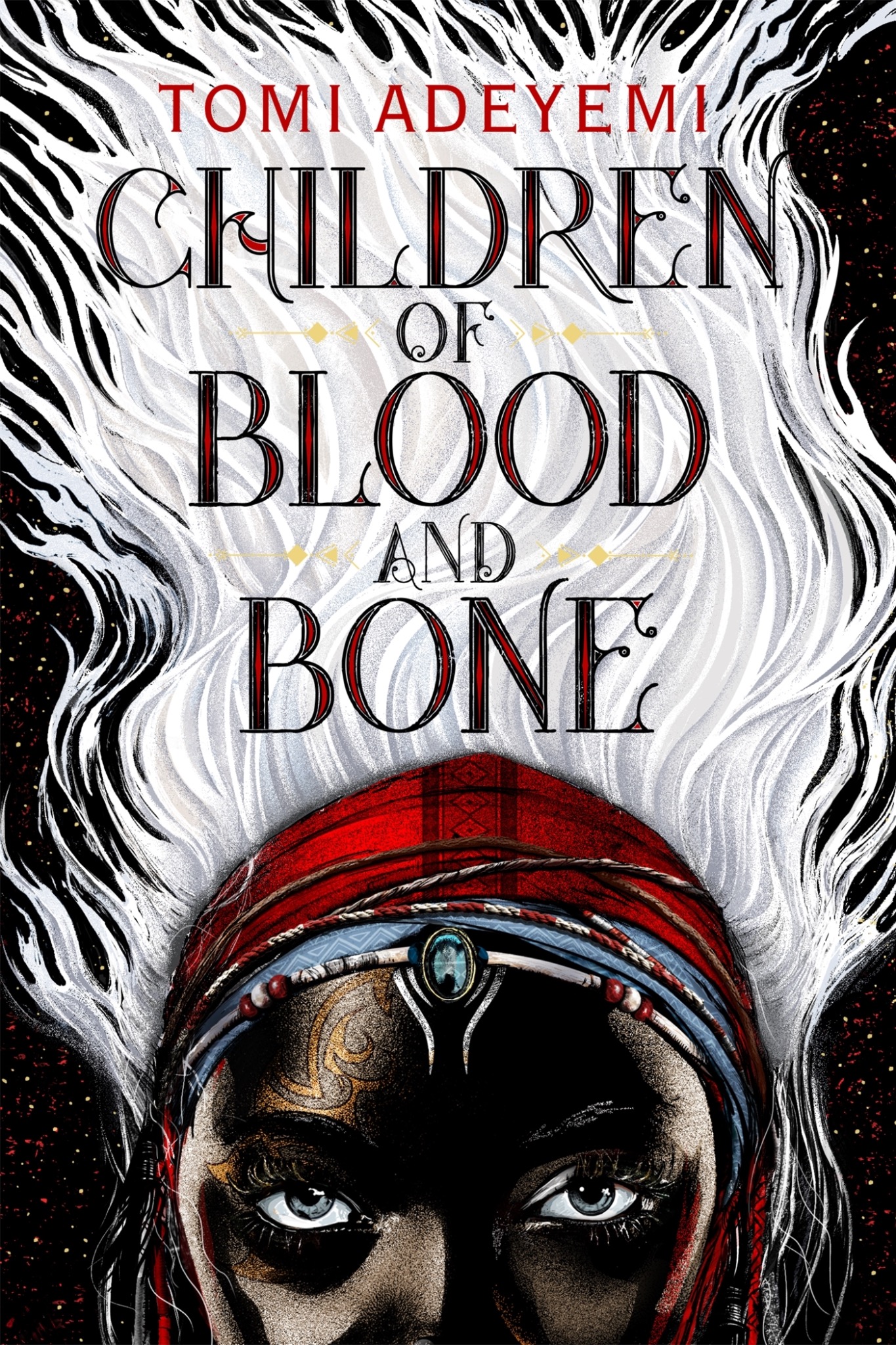 2018 · Book one
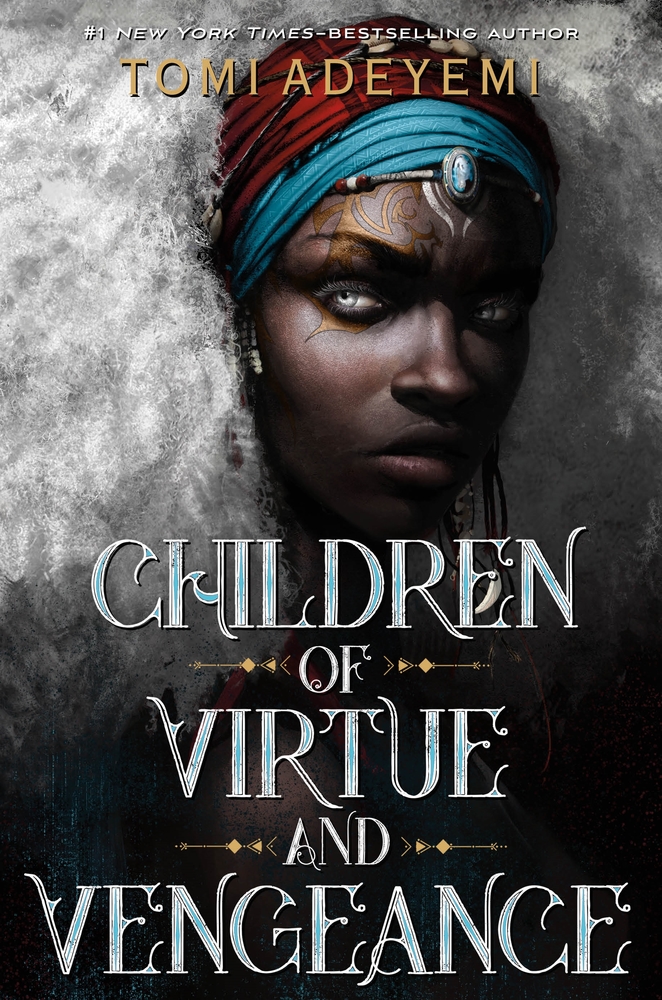 2019 · Book two
Children of Virtue and Vengeance
The second adventure in the Legacy of Orïsha trilogy.
Find the book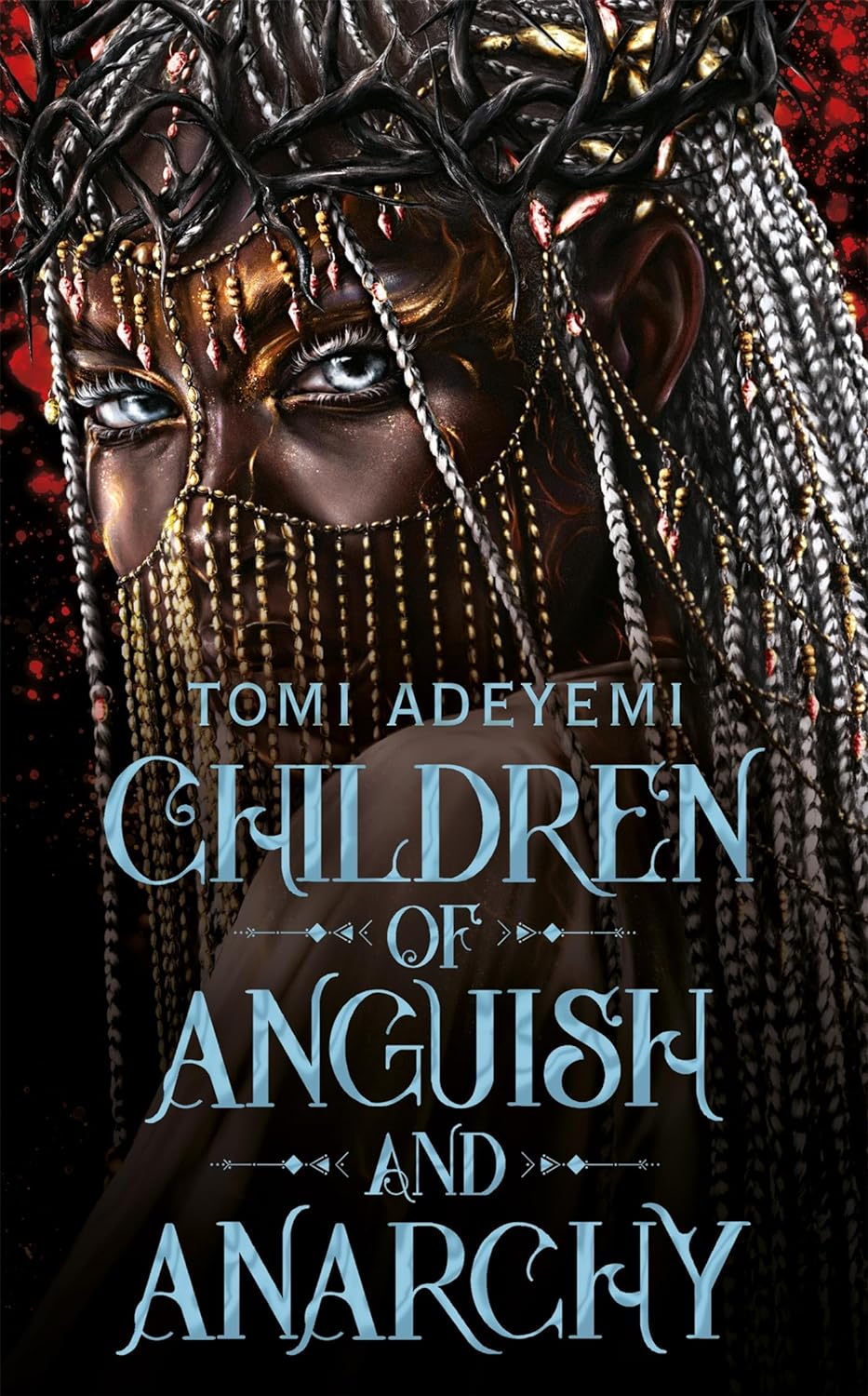 2024 · Book three
Original book covers shown for editorial identification; artwork rights belong to their respective holders.
Children of Blood and Bone in Cinemas
Directed by Gina Prince-Bythewood. Screenplay by Gina Prince-Bythewood and Tomi Adeyemi. The announced US opening date is 15 January 2027.
Watch, Read, and Explore
Watch the official trailerBuy Children of Blood and BoneExplore the trilogyThe Woman King
Explore the Afro-Brazilian spiritual traditions behind my own novel: Exu, Ogun and Aparecida · Terreiros, Orixás and Survival · The Chosen Dictionary.
Sources and Further Reading
- The Guardian, March 2018 — parents, childhood and debut
- THISDAY, October 2020 — family background
- Illinois Center for the Book — education and childhood
- ELLE, June 2024 — family, childhood writing and the rejected manuscript
- Harvard Magazine, August 2024 — Harvard and Brazil
- Library of Congress — author biography
- Publishers Weekly, June 2018 — Pitch Wars and the publishing process
- Deadline via IMDb, March 2017 — pre-publication film and publishing rights
- Associated Press, November 2018 — Nora Roberts dispute and apology
- Nora Roberts’s official blog — 2018 response
- Pulse Nigeria — Nora Roberts’s response
- TIME, December 2019 — sequel and film development
- The Hollywood Reporter via Yahoo, January 2022 — Lucasfilm and the rights
- Deadline via Yahoo, January 2022 — Paramount agreement
- Kirkus Reviews, December 2023 — director announcement
- Tomi Adeyemi — official biography
- TheGrio, February 2025 — colourism and Stenberg’s response
- Geena Davis Institute, March 2021 — screen representation research
- ELLE — casting and production chronology
- The Independent, July 2026 — public separation and text messages
- Teen Vogue, July 2026 — the author and actor dispute
- The Guardian, July 2026 — Adeyemi’s account of distress
- Vanity Fair, August 2026 — production investigation
- The Guardian, September 2026 — interview with Adeyemi
- Macmillan — The Siren
- ELLE, October 2026 — interview with Prince-Bythewood
- Vanity Fair, November 2026 — interview with Adeyemi
- People, 16 November 2026 — renewed promotion
- Kirkus Reviews, 17 November 2026 — latest statement
- The Unrepentant Woman — publication associated with the supplied Instagram commentary
- Paramount — official film information and release date
- Malala Fund — December 2018 interview on writing and adaptation
- Publishers Weekly — BookCon 2018 interview
- Forbes — the visual world of the film
- Paramount — new trailer and Tems soundtrack announcement
- Official film website — cast and release date